


What If Help Could Reach Older Adults Wherever They Are? Reacher Technologies Is Making It Possible
How HebronSoft built the real-time technology connecting residents, caregivers, wearables, and emergency response.
At a Glance
- Client — Reacher Technologies — safety & location intelligence platform · San Diego, CA
- Challenge — Connect wearable hardware, indoor positioning, real-time alerts, and multi-role access into one integrated platform
- Delivery — Pilot-ready MVP in 3 months
- Platforms — iOS · Web · Apple Watch · IoT
- Infrastructure — AWS · .NET 8.0 · Real-time architecture · CI/CD
- Industry — HealthTech · Senior Living · IoT
- Services — Discovery & Tech Advisory · iOS Development · Backend Engineering · Web Development · UX/UI Design · QA · DevOps
The Company
A plug-and-play safety platform built for the world we want to age into
Reacher Technologies is a San Diego-based startup building a rapidly deployable, plug-and-play safety and location intelligence platform powered by patent-pending, low-power, long-range communication technology. The platform serves senior living communities, in-home care environments, hospitals, rehabilitation centers, schools, event venues, and stadiums — anywhere people need continuous protection and immediate response capability.
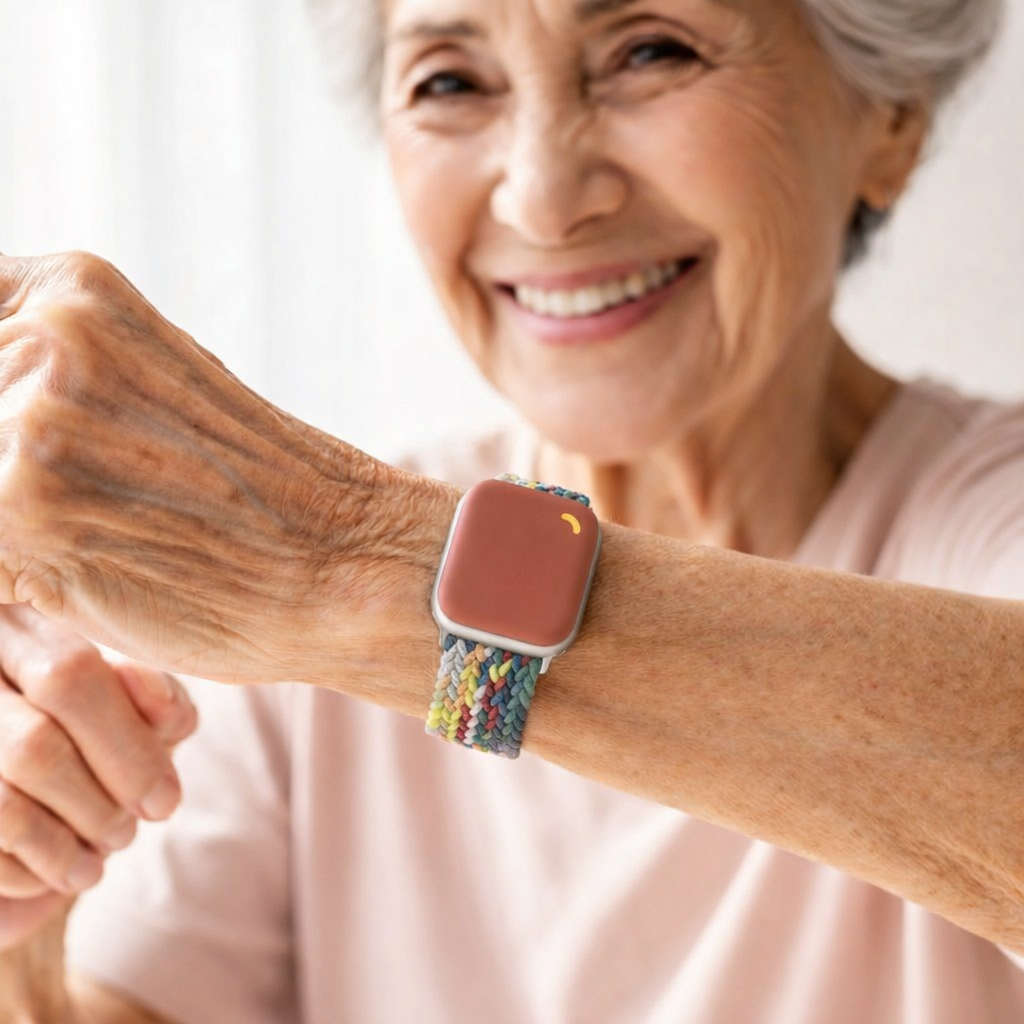
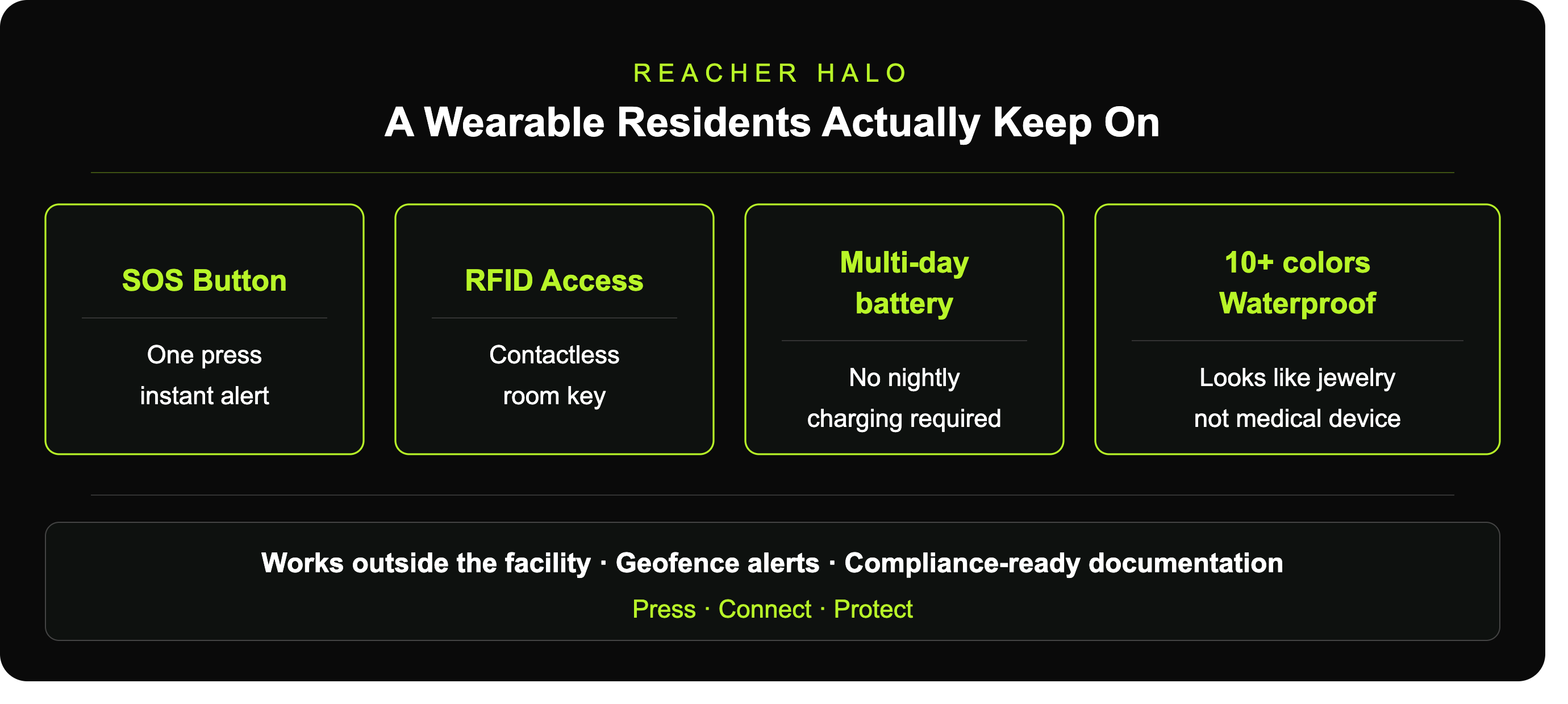
The hardware at the center of the platform is the Reacher Halo wristband: a lightweight, waterproof wearable with a built-in SOS button and RFID module that also serves as a contactless room key. Smart Gateways plug into standard electrical outlets and create their own network without requiring facility Wi-Fi or cable installation. The system deploys in hours, not weeks.
HebronSoft built the software layer that makes it all work: the iOS mobile application for caregivers, the web platform for administrators, the backend infrastructure, and the IoT integration that connects wristbands and beacons to the people responsible for resident safety.
Alerts route automatically to caregivers, security personnel, supervisors, administrators, emergency responders, or 911 — based on the severity and location of the incident. Beyond emergency response, the platform provides actionable insights into time spent in rooms, areas visited, movement patterns, and meaningful changes in daily activity, helping organizations identify potential health changes earlier and respond more effectively.
The Reacher Halo also works beyond facility boundaries: when a resident leaves for a walk, the wristband continues transmitting alerts and GPS location outside the building. Reacher Technologies is also developing dedicated safety and accessibility solutions for veterans.
The Market Problem
An $80 Billion Safety Problem — in an Already Strained Care System
Over 14 million older adults in the US — one in four — fall each year, according to the CDC. Falls are the leading cause of fatal and nonfatal injuries among older adults. The direct healthcare cost of those falls exceeds $80 billion annually and is projected to reach $101 billion by 2030, according to the National Council on Aging.
At the same time, surveys by the American Health Care Association and National Center for Assisted Living consistently show that more than 90% of nursing homes and assisted living communities report staffing shortages. Caregivers are overloaded and reactive — conducting manual room-by-room checks, responding after incidents have already occurred, and relying on systems that cannot reach residents when they need help most.
Most care homes still rely on wall-mounted pull cords installed in bedrooms and bathrooms. If a resident falls in a corridor, a dining room, or outside the building, they cannot reach the button. Replacing or upgrading these systems requires running hundreds of meters of cable, opening walls, and shutting down facility operations — at a cost of tens to hundreds of thousands of dollars.
Reacher Technologies was built to move senior living from expensive, reactive care to continuous, room-accurate protection and predictive health insights — without requiring any of that infrastructure.
The Challenge
Build an integrated safety system connecting hardware and software in three months
Reacher Technologies came to HebronSoft with a clear but complex problem: build an MVP that connected wearable wristbands and in-room beacons to a caregiver mobile application and an administrator web platform — with real-time location tracking, fall detection, emergency alerts, and organizational management — within three months.
The technical scope was broad: wristband-beacon integration, indoor positioning, real-time notifications, role-based access control, and a web admin panel for managing organizations, users, and devices. Hardware dependency created its own risk — any delays in device availability or configuration would compress the development window further. The MVP had to be delivered tested and approved, ready for pilot launch.
Inside the Room
The engineering decision that shaped everything
Reacher was not building three separate products — a wearable, a caregiver app, and an admin dashboard. The requirement was one real-time system in which an event detected at the hardware layer — a fall, a button press, a beacon transition — could reach the right caregiver immediately, while location data, resident profiles, permissions, and organizational structure remained synchronized across every surface of the platform simultaneously. That requirement shaped the architecture from the beginning: a real-time event pipeline from hardware to human, with role-based data access enforced at every layer.
The Apple Watch question
During the engagement, the team conducted a formal feasibility assessment of whether Apple Watch could serve as an alternative to a dedicated hardware wristband — covering steps, location tracking, alerts, fall detection, and background data sync reliability.
The assessment found that Apple Watch performs well for activity tracking, user-driven alerts, approximate location, and rich UX integration. It is weaker as a full dedicated medical wristband replacement for strict continuous telemetry. Fall detection is conditionally possible but requires a special Apple entitlement, and background operation is subject to watchOS power management that does not guarantee always-on behavior. The conclusion shaped the architecture: the team built an Apple Watch app to mirror wristband behavior as a companion option, while the dedicated hardware wristband remained the primary device for clinical environments.
What We Built
An integrated safety ecosystem across wearables, mobile, and web
Resident
Halo Wristband — SOS button · fall detection · location · RFID room key
↓
Location & Connectivity
In-room Beacons · Smart Gateways · AWS IoT Core · Amazon Sidewalk
↓
Real-Time Intelligence
Location tracking · Fall detection · SOS alerts · Check-in · Activity patterns
↓
Caregiver
iOS App — live map · alerts · check-in · emergency response workflow
↓
Organization
Web Platform — residents · devices · beacons · analytics · role-based access
Wristband & Beacon Integration
- Real-time resident location tracking through wristband-beacon proximity detection
- Fall detection and automatic emergency alert triggering
- Check-in functionality: caregiver-initiated wellbeing verification via wristband prompt
- Emergency alert on button press, routed immediately to caregiver mobile app
- Beacons installed in each room as charging stations and precise indoor positioning anchors
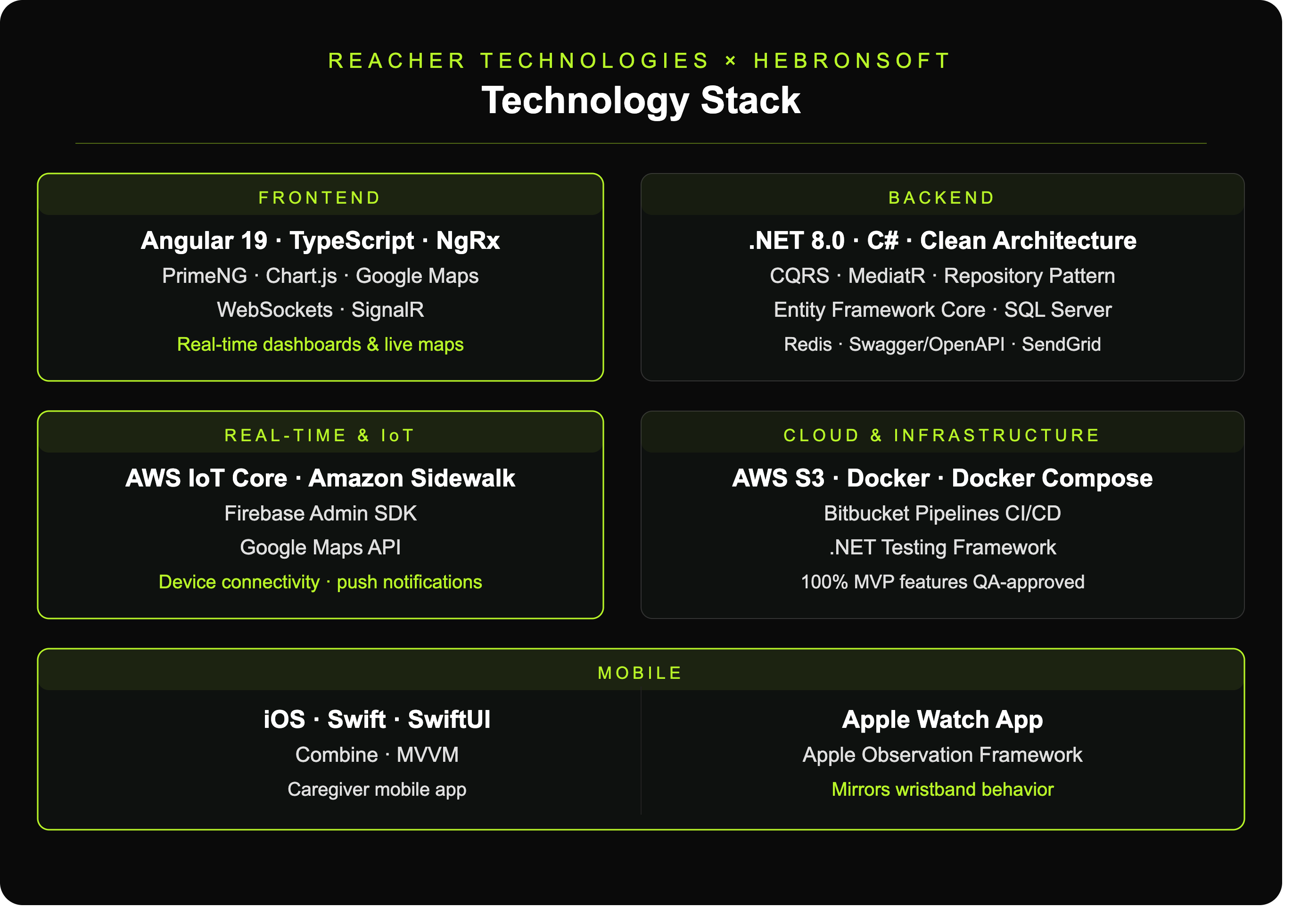
- AWS IoT Core for device connectivity and telemetry · Amazon Sidewalk for extended connectivity
iOS Mobile Application for Caregivers
- Real-time resident monitoring across the care home floor
- Emergency alert reception and response workflow
- Check-in initiation and resident wellbeing status
- Live location map with Google Maps API integration
- Push notifications via Firebase Admin SDK
- Built in Swift, SwiftUI, Combine · Apple Watch App mirrors wristband behavior
Web Platform for Administrators and Caregivers
- Organization management: registration, unique organization codes, user onboarding
- Resident management: profiles, wristband assignment, care plans
- Device and beacon management across the facility
- Activity analytics: time-in-room data, movement patterns, behavioral change detection
- Chart.js dashboards · Google Maps integration · real-time updates via WebSockets and SignalR
- Role-based access control enforced across caregiver and administrator roles
Backend & Infrastructure
- .NET 8.0 · Clean Architecture · CQRS with MediatR · Repository Pattern
- SQL Server · Entity Framework Core · Redis for caching
- AWS S3 · Docker · Docker Compose · Bitbucket Pipelines CI/CD
- SendGrid for email communications · Swagger/OpenAPI documentation
- 100% of MVP features tested and approved by QA before release
Delivery Outcome
From concept to pilot-ready platform in three months
- Functional MVP delivered, tested, and approved within the three-month timeline
- Wristband-beacon integration operational with real-time location accuracy
- Emergency alert pipeline tested end-to-end: fall detection → alert → caregiver notification
- Administrator web portal live with full organizational management capability
- Apple Watch companion app delivered as alternative device option
- Platform ready for pilot launch across senior living environments
What This Project Taught Us About Building Connected HealthTech
Consumer hardware and dedicated medical devices solve different problems, even when they overlap technically. Apple Watch performs well for activity tracking, user-driven alerts, and approximate location — but watchOS power management does not guarantee always-on behavior, and fall detection requires a special Apple entitlement that constrains production use. For clinical environments where continuous monitoring is a safety requirement, not a convenience, the architecture has to account for that distinction from the start. The Apple Watch companion app delivered for Reacher is a genuine addition to the platform — but it was never a replacement for dedicated hardware.
In IoT MVP delivery, the software architecture and the hardware integration layer need to be designed independently enough that development and testing can proceed without waiting for physical devices to be available. Hardware delays are not exceptional — they are routine in connected product development. Building the software layer to be testable against hardware abstractions, rather than against the hardware itself, is what keeps a three-month timeline credible when components arrive late.

We will always choose to partner with them
We at Reacher Technologies Inc. love working with everyone at HebronSoft. They’re excellent at what they do, with a heart for helping others. We will always choose to partner with them, and I couldn't give a company a higher recommendation.


You might be interested in
EON Lab by OneVital: An App That Explains Your Health, Not Just Tracks It
How HebronSoft designed and engineered the AI, scoring models, wearable integrations, and mobile applications behind EON Lab.
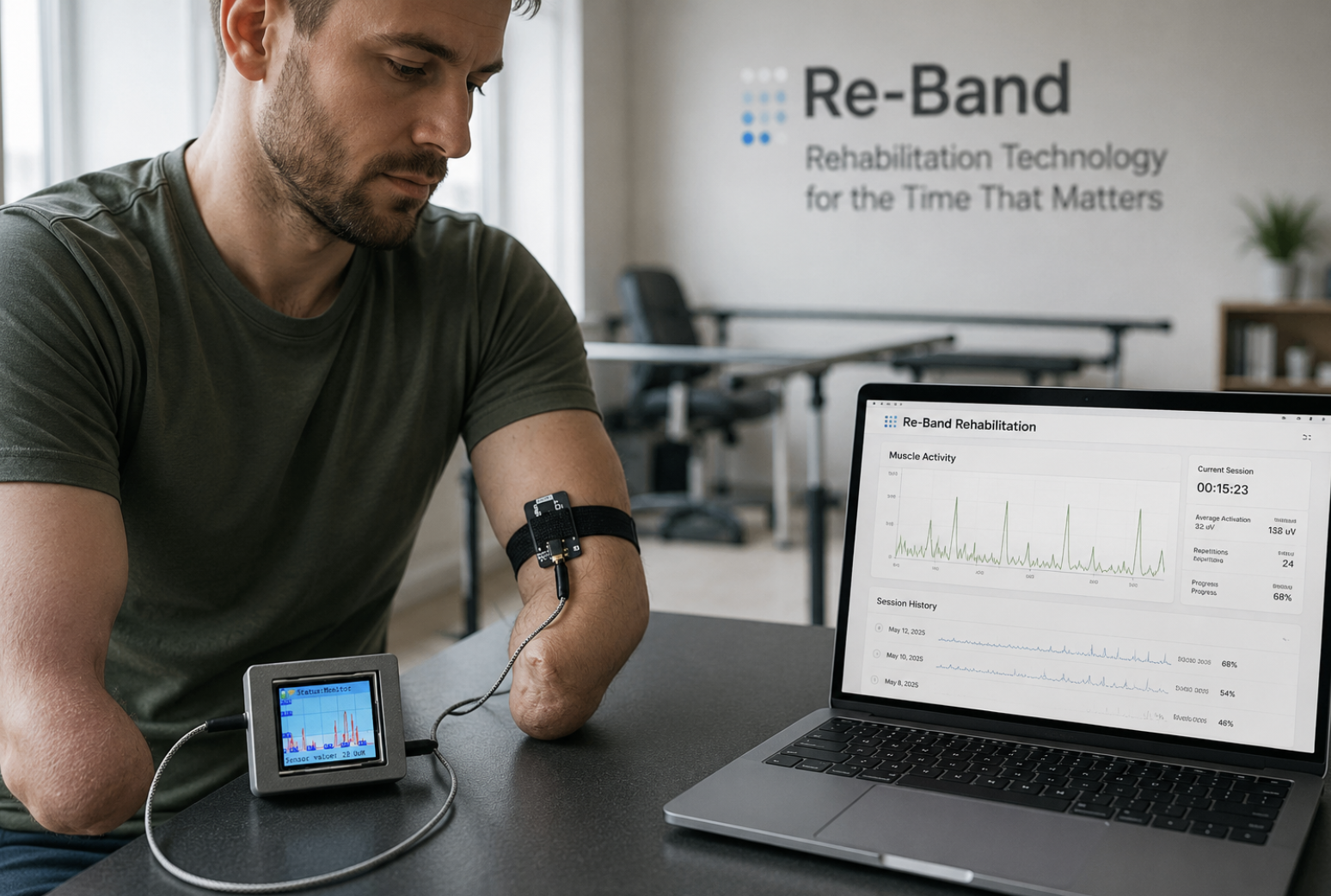
Re-Band: Building the Missing Link in Prosthetic Rehabilitation
A wearable rehabilitation device that helps amputees maintain residual muscle activity while waiting for a prosthesis. Developed inside HebronSoft’s Innovation Lab, Re-Band combines EMG sensing, real-time feedback, remote monitoring, and direct input from veterans, students, engineers, and rehabilitation specialists.
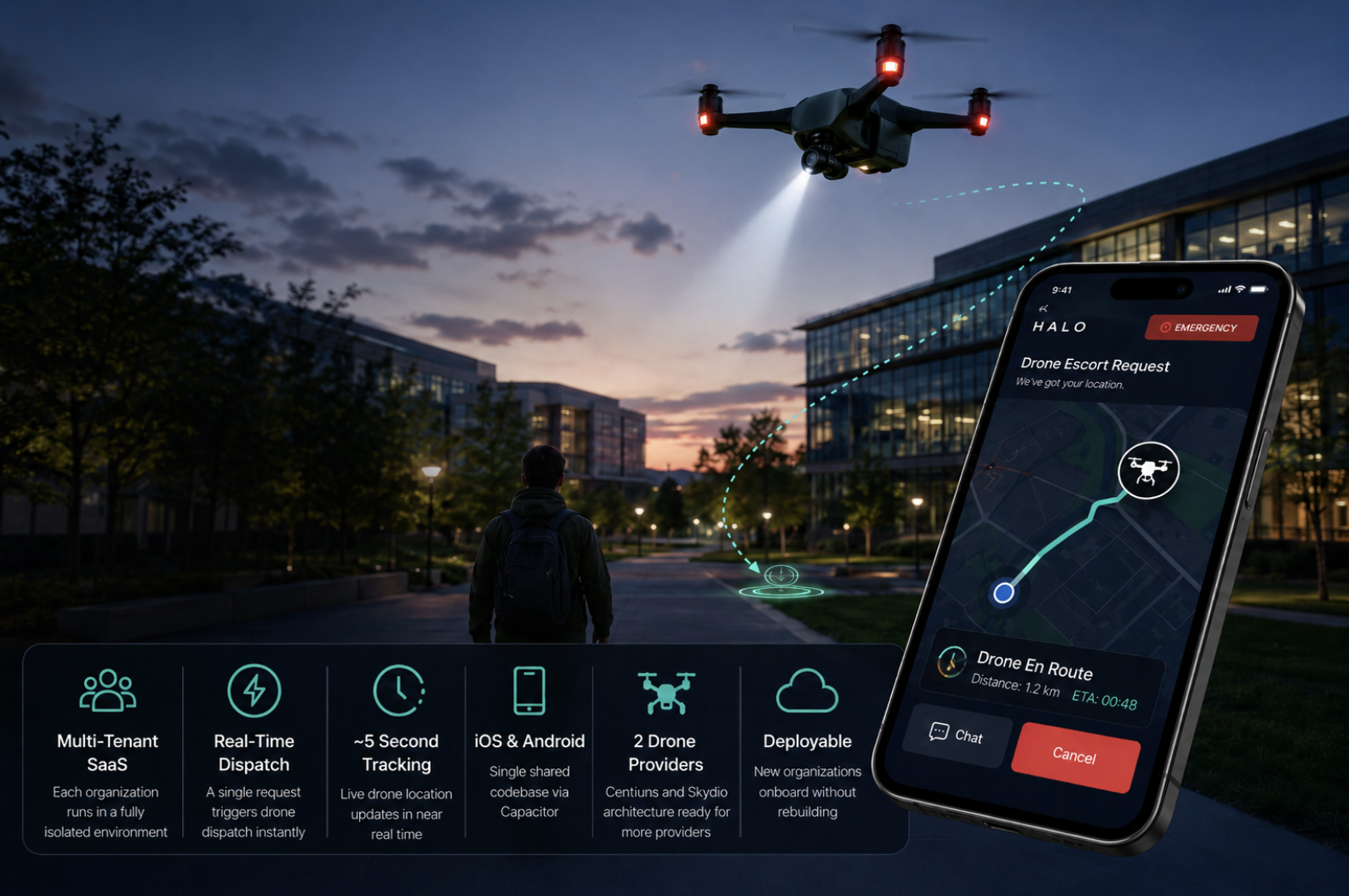
Halo: When Help Can’t Wait, the Drone Arrives First — Inside the Platform That Makes It Possible
A drone-assisted safety platform that turns a single emergency request into real-time drone dispatch, operator routing, live tracking, and secure multi-tenant coordination for campuses and controlled environments.
 AI Assistant