


Re-Band: Building the Missing Link in Prosthetic Rehabilitation
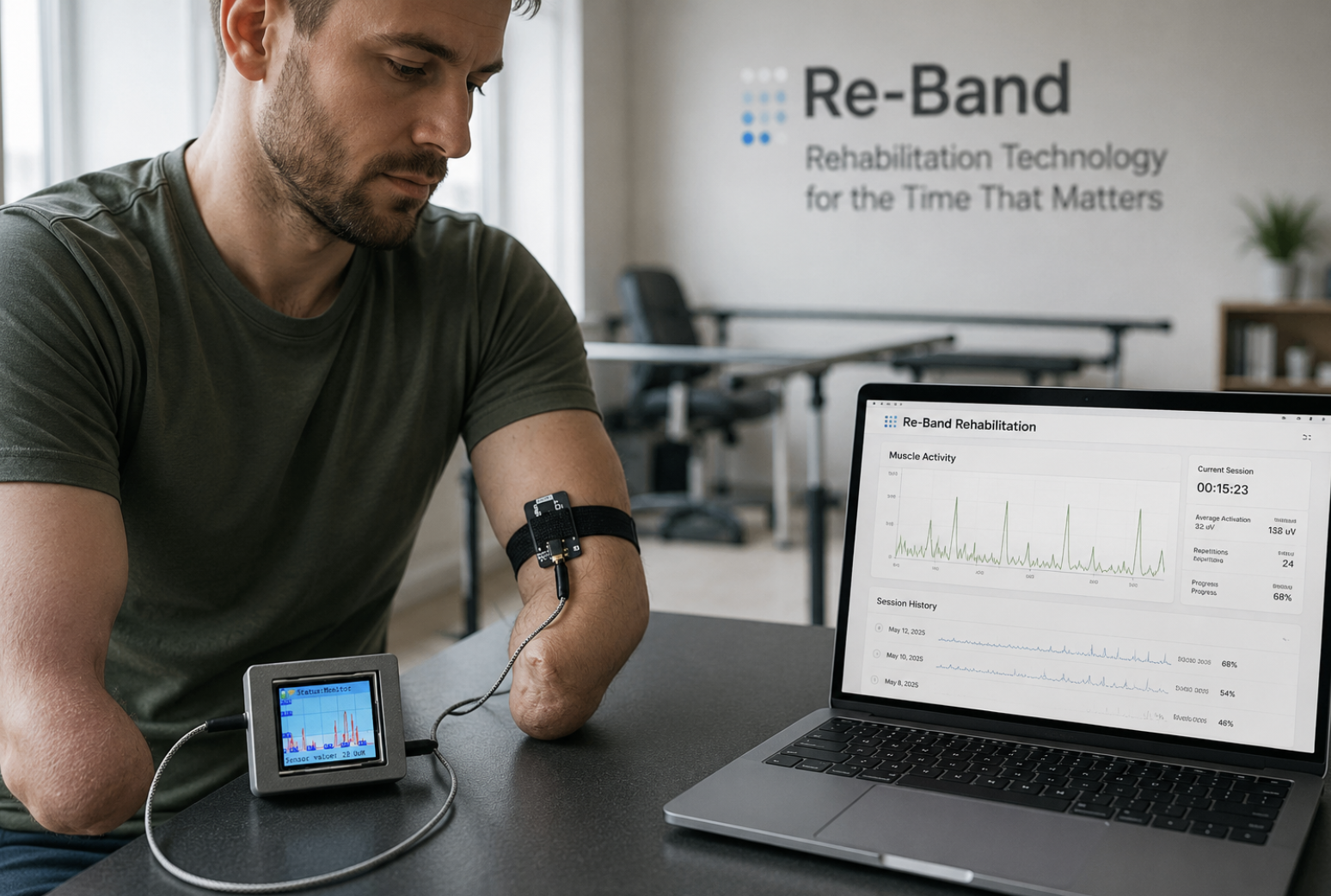
Re-Band is a wearable rehabilitation device designed to help people maintain residual muscle activity while waiting for a prosthesis.
What began as a student-built bionic hand has evolved into a working rehabilitation prototype and the flagship project of HebronSoft’s Innovation Lab, now moving toward clinical validation.
Re-Band brings together professional engineers, rehabilitation specialists, students, and veterans in a single development environment — working on a product with direct social impact alongside the people who understand the problem firsthand.
MedTech Innovation · Rehabilitation Technology · Lviv & Kyiv, Ukraine
At a Glance
- Stage — Working prototype · Seeking clinical partners and investment
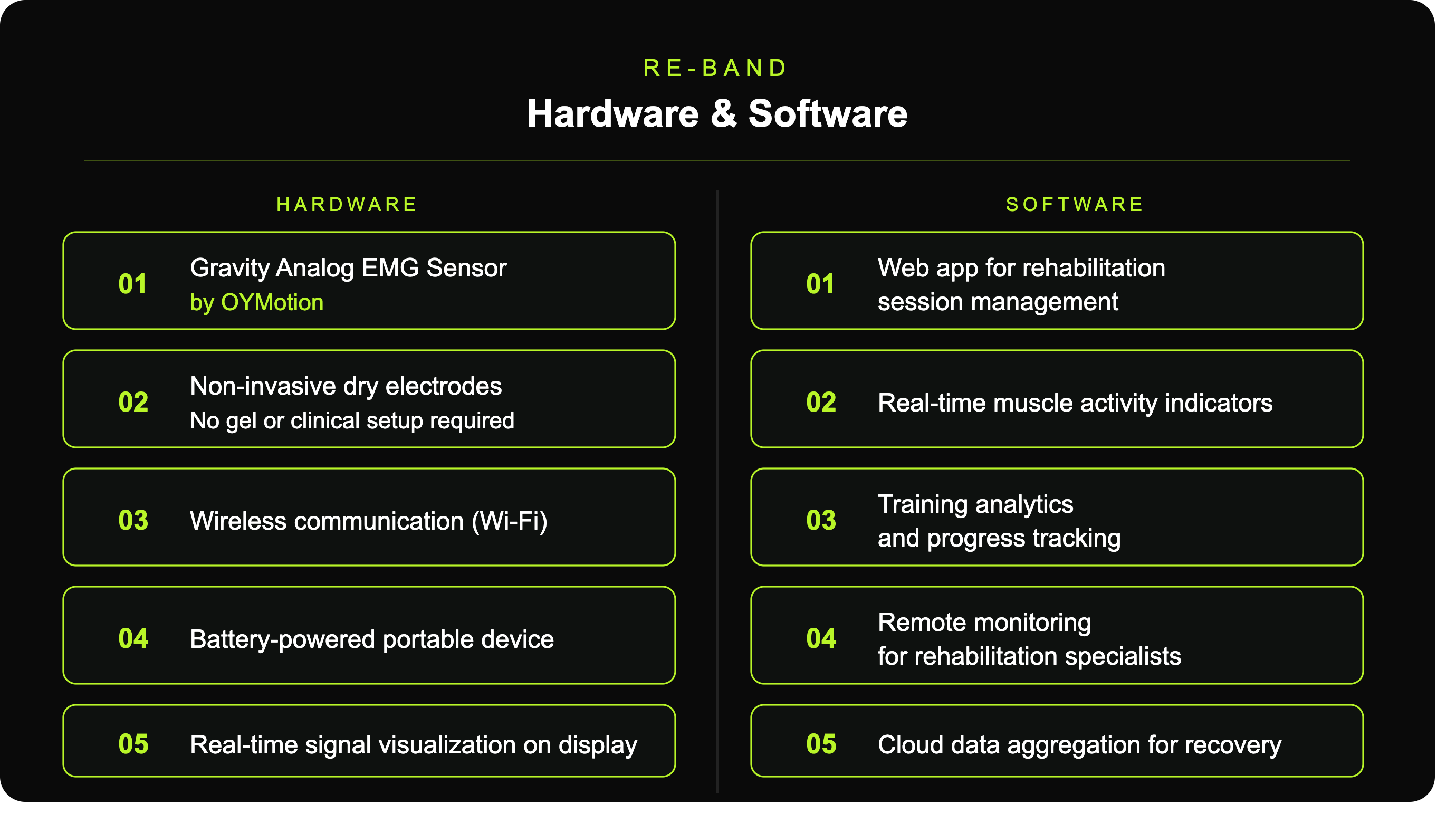
- Hardware — Surface EMG sensor (OYMotion), dry electrodes, microcontroller, Wi-Fi, display
- Software — Web app for training management, real-time monitoring, remote progress tracking
- Origin — Hebron IT Academy students + HebronSoft engineers · Started with a 3D-printed bionic hand
- 2026 — First veteran cohort in Lviv · New student cohort in Kyiv · Building together
Origin
From a Bionic Prosthesis Project to a New Approach to Recovery
Re-Band began as part of HebronSoft’s work on affordable bionic prosthetics, developed together with students from Hebron IT Academy in Lviv. After the full-scale invasion, the need for accessible prosthetic solutions became urgent. The team built HebronCare 1.0 — a 3D-printed hand using Arduino and EMG electrodes, providing an affordable solution for people in Ukraine waiting for full prosthetic fitting.
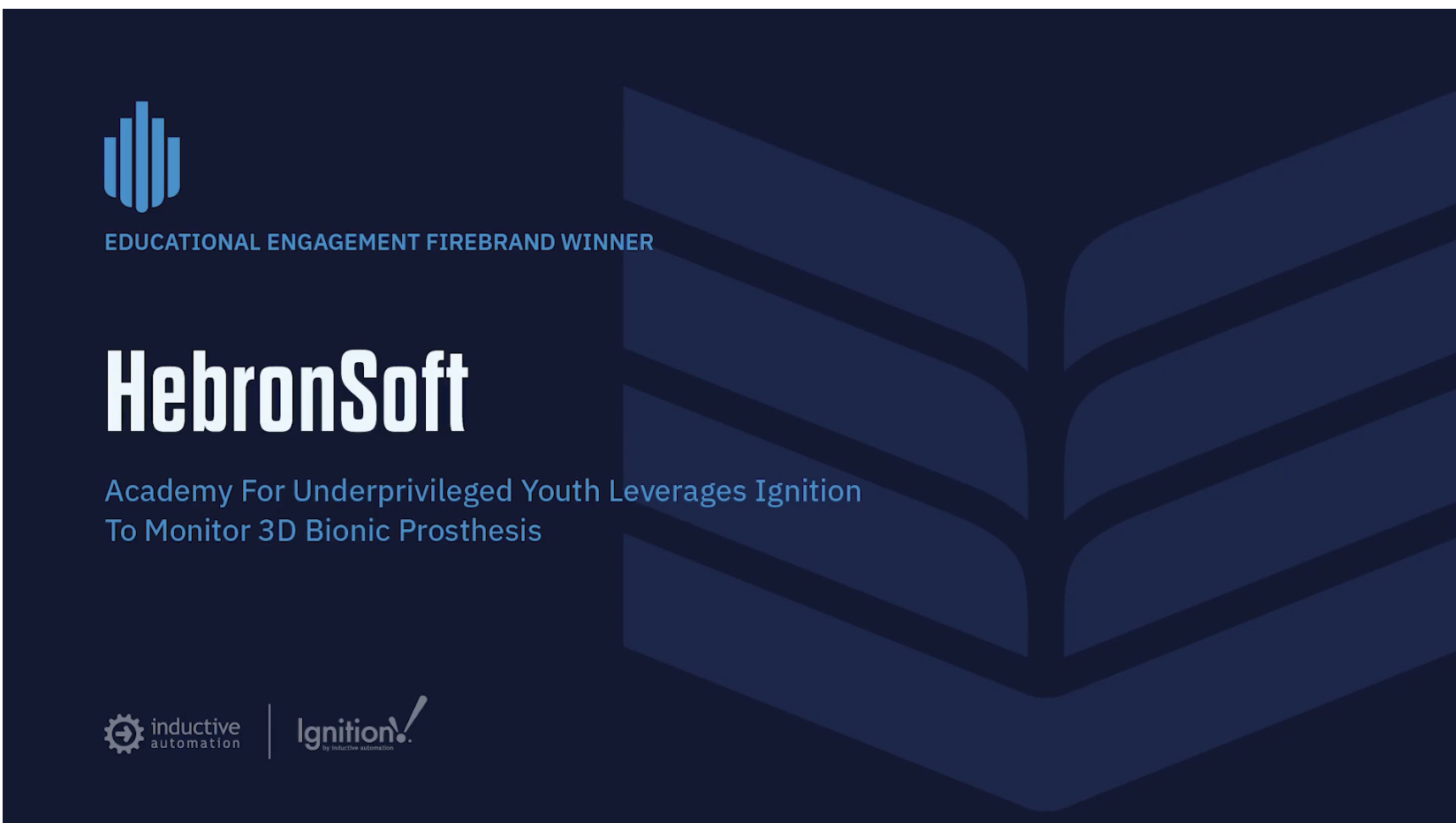
The team also built a custom Ignition dashboard to track muscle sensor activity in near real time — giving users live feedback on how the prosthesis responded to their muscle signals and creating a measurable training environment that addressed both physical and psychological readiness.
HebronCare 1.0 was recognized with the Inductive Automation 2025 Educational Engagement Firebrand Award — acknowledging the project as an example of how industrial technology and engineering education can come together around a real human need.
Working on that project brought the team into direct conversations with rehabilitation specialists. What they heard consistently pointed in a different direction.
The Problem
Recovery Cannot Wait for a Prosthesis
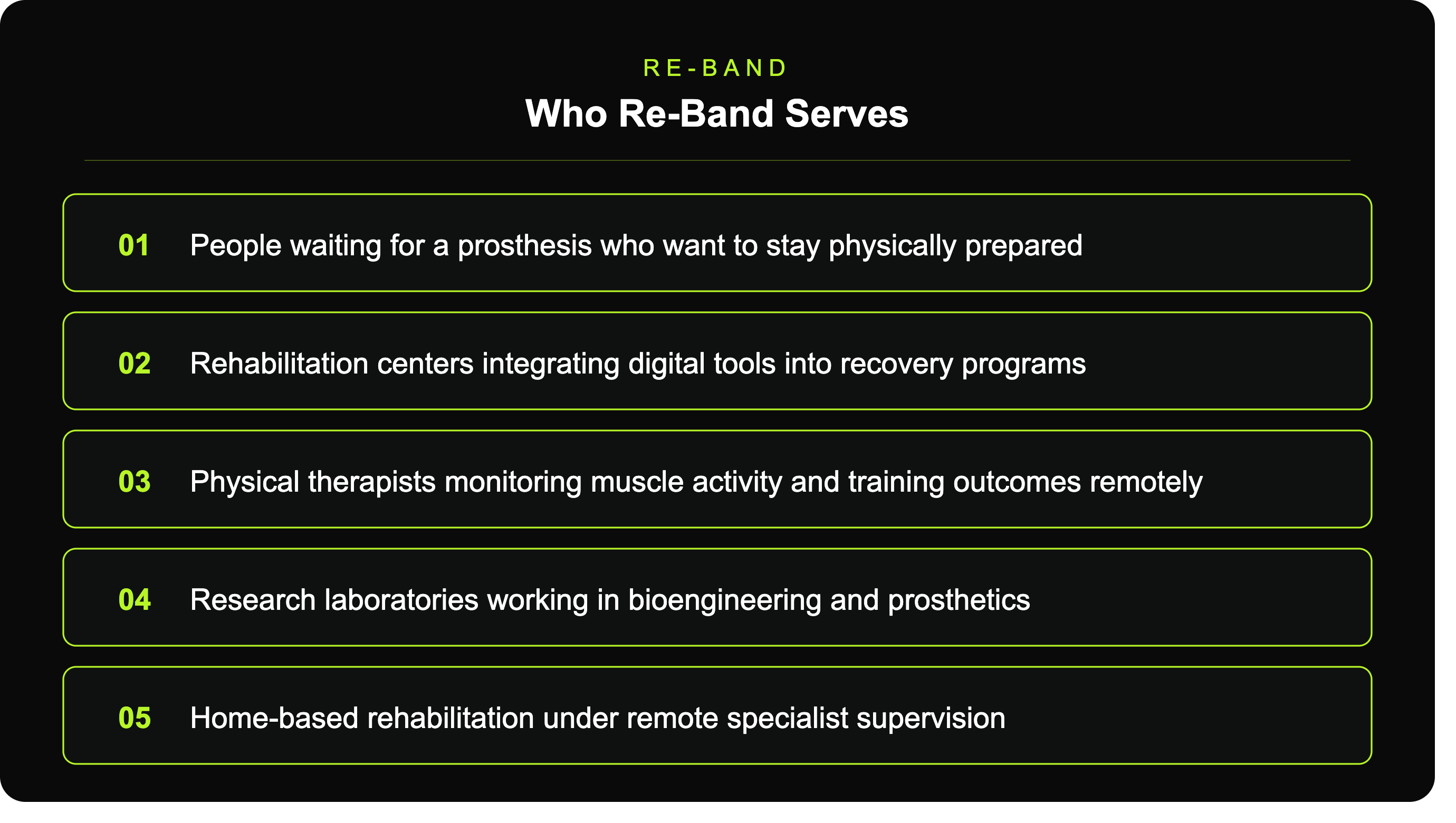
Around 65 million people worldwide live with limb amputations, with approximately 1.5 million new amputations performed every year. Diabetes and vascular disease remain the leading causes globally, while the war in Ukraine has created tens of thousands of additional cases and accelerated the need for accessible rehabilitation technologies. About two-thirds of people living with limb loss are in low- and middle-income countries, where access to prosthetics and rehabilitation is most limited.
After an amputation, waiting for a prosthesis can take weeks or months. During that time, residual muscles lose tone and responsiveness. By the time the prosthesis arrives, many patients have already lost the muscle control they need to use it.
The wait also affects motivation and confidence. Some patients adapt to life without a limb and stop engaging with rehabilitation altogether. Many existing approaches require specialized equipment or continuous clinical supervision — which limits access to consistent training outside the clinic.
What Clinicians Kept Saying
The feedback from doctors and rehabilitation specialists was consistent: the period before a person receives a prosthesis is often just as critical as rehabilitation afterward. Patients were losing muscle activity and motivation during the wait, and arriving at prosthetic fitting less prepared than they could have been.
Re-Band addresses what happens before the prosthesis arrives — not after.
Why This Matters
Limb loss affects millions of people worldwide, yet most rehabilitation technologies focus on life after a prosthesis is fitted. Re-Band addresses an earlier stage of recovery: helping patients preserve muscle activity and engagement during the weeks and months before a prosthesis arrives.
What We Are Building
A wearable bracelet that reads muscle signals, shows activity in real time, and sends data for therapist tracking
The current prototype reads muscle signals, shows activity in real time, and sends data to a server where therapists can track progress.
Wearable EMG Monitoring
The device uses non-invasive surface EMG sensors to capture bioelectrical muscle signals through dry electrodes, allowing patients to train residual muscles without specialized clinical equipment.
Personalized Calibration
The system sets individual activation thresholds based on each user’s own muscle signals — measuring both rest and active contraction. These thresholds are used during training to show whether the patient has reached the target level of activation and how consistently they can hold it.
Real-Time Feedback and Remote Monitoring
Muscle activity is displayed on the device in real time and transmitted to a server. Rehabilitation specialists can review training data remotely and track how a patient’s muscle function changes over time.
Interactive Training
The long-term vision includes game-based and interactive experiences that help patients stay motivated and engaged throughout the rehabilitation process.
Validation
Engineers, Students, and Veterans Working on the Same Mission
Re-Band is being developed inside HebronSoft’s Innovation Lab. This year, veterans from the first Hebron IT Academy cohort in Lviv joined the project — contributing their own experience with rehabilitation and helping shape future development. A new student cohort beginning in Kyiv will work alongside HebronSoft engineers on the next generation of the device.
Some of the people building Re-Band are also the people it was designed to help. Their experience shapes the product from the very beginning.
What’s Next
A prototype ready for the next conversation
Re-Band is a working prototype at an early stage. The next phase focuses on clinical validation, user testing with rehabilitation specialists, and refining the device based on real patient feedback.
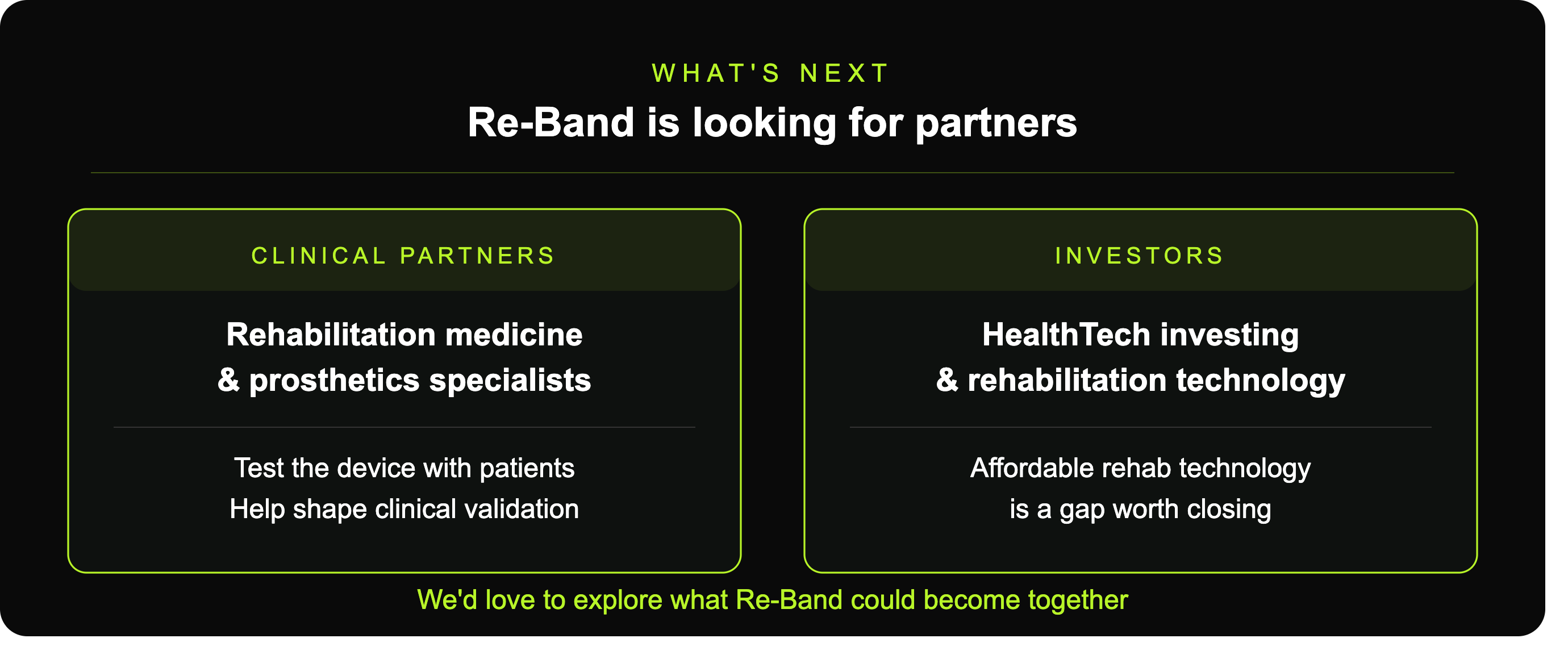
We are looking for clinical partners who can test the device with patients, and for investors who see affordable rehabilitation technology as a gap worth closing.
If you work in rehabilitation medicine, prosthetics, or HealthTech investing, we’d love to explore what Re-Band could become together.
You might be interested in
EON Lab by OneVital: An App That Explains Your Health, Not Just Tracks It
How HebronSoft designed and engineered the AI, scoring models, wearable integrations, and mobile applications behind EON Lab.
From Automation to AI: Our Partnership with InflexionPoint
Since 2022, our teams have worked together across industrial automation, life sciences, pharmaceuticals, and advanced manufacturing, combining deep domain expertise with software engineering to help manufacturers modernize operations and build the next generation of connected, data-driven facilities.
How PN Medical Turned 40 Years of Clinical Knowledge Into a Scalable Platform
A scalable healthcare platform that turns PN Medical’s respiratory training devices into a connected clinical evidence ecosystem for hospitals, home health patients, coaches, athletes, and institutional research partners.
 AI Assistant