


How We Unified Ignition SCADA, MES, and Operational Tools Into a Single Environment for Manufacturing Operations
How we connected Ignition SCADA, TruTraq, LabOWL, and Smart Start into a single unified platform for manufacturing operations across life sciences, food & beverage, and critical infrastructure — eliminating the need to switch between standalone industrial applications.

At a Glance
- Industry — Industrial Automation · Manufacturing · Life Sciences · Food & Beverage · Critical Infrastructure
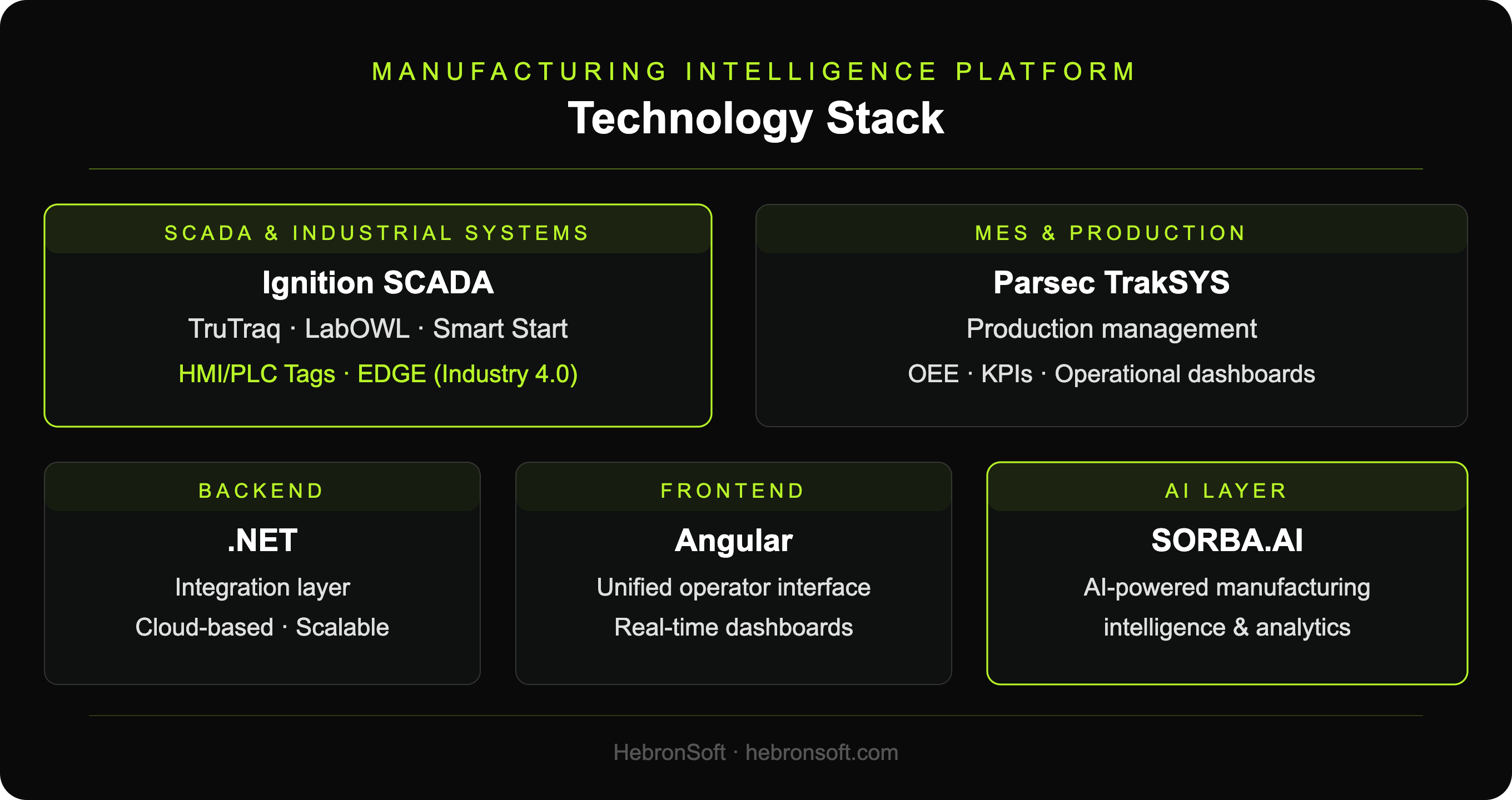
- Stack — Ignition SCADA · Parsec TrakSYS · .NET · Angular · HMI/PLC Tags · EDGE (Industry 4.0) · SORBA.AI
- Services — Solution Implementation · Discovery & Tech Advisory · UX & UI Design · Testing · Cloud & DevOps · Full-stack Engineering
- Result — Unified platform connecting Ignition SCADA, TruTraq, LabOWL, Smart Start, and custom applications
The Client
An independent systems integrator serving manufacturing across multiple industries
Our client is an independent systems integrator with deep expertise in industrial automation and manufacturing operations, serving manufacturers across life sciences, food & beverage, and critical infrastructure. The company designs and implements automation solutions that connect plant-floor systems with operational intelligence and business data.
The name of the client and the platform are not disclosed under the terms of our engagement.
The Problem
Operators switching between systems instead of running them
Manufacturing operations across life sciences, food & beverage, and critical infrastructure generate valuable data — but that data lives in disconnected systems. Ignition SCADA handles process monitoring. TruTraq tracks production. LabOWL captures bioreactor data. Smart Start manages another layer of operations. Each application is standalone. Each requires operators to context-switch throughout their shift.
The problem is not a lack of data. It is a lack of coherence.
When operators must move between four or five separate applications to understand what is happening across a single facility, decision-making slows, errors increase, and the operational picture is always fragmented. Beyond day-to-day operations, many manufacturing clients also need custom implementations built on top of their core systems — adding further complexity to an already fragmented environment.
What We Built
A unified platform that brings every system into one environment
HebronSoft designed, architected, and developed a unified industrial data platform that integrates Ignition SCADA, TruTraq, LabOWL, Smart Start, and any other browser-based application into a single, coherent environment. Operators access everything they need — OEE data, production KPIs, bioreactor monitoring, process dashboards — without leaving the platform.
Platform Capabilities
- Unified interface integrating Ignition SCADA, TruTraq, LabOWL, Smart Start, and custom browser-based applications
- Real-time OEE data, KPIs, and operational dashboards in a single view
- Complex backend and integration layer connecting heterogeneous industrial systems
- Cloud-based scalable architecture — extensible as business needs and applications grow
- AI-powered capabilities via SORBA.AI integration
- Custom implementations built alongside the core platform for client-specific requirements
- Industry 4.0 EDGE connectivity for real-time data from plant-floor devices
Business Impact
From fragmented tools to a single operational environment
- Operations supervisors and managers access all facility OEE data, KPIs, and dashboards from one platform
- Eliminated the need to switch between standalone applications during operational shifts
- Data-driven decision-making enabled across production management, supply chain, MES/MOM, and automation systems
- Platform architecture designed for extension — new applications and data sources added without rebuilding
- Expansion into Life Sciences and Pharmaceutical domains enabled through the platform’s data and AI capabilities
What We Learned
Integration complexity lives in the seams between systems
The visible challenge in a project like this is the frontend — creating a coherent interface across multiple applications. The harder engineering work is in the integration layer underneath: connecting systems that were not designed to communicate, normalizing data formats that were built for different purposes, and making the result fast and reliable enough for operational use. The integration layer is where industrial software projects most commonly fail, and where the most significant engineering decisions are made.
You might be interested in
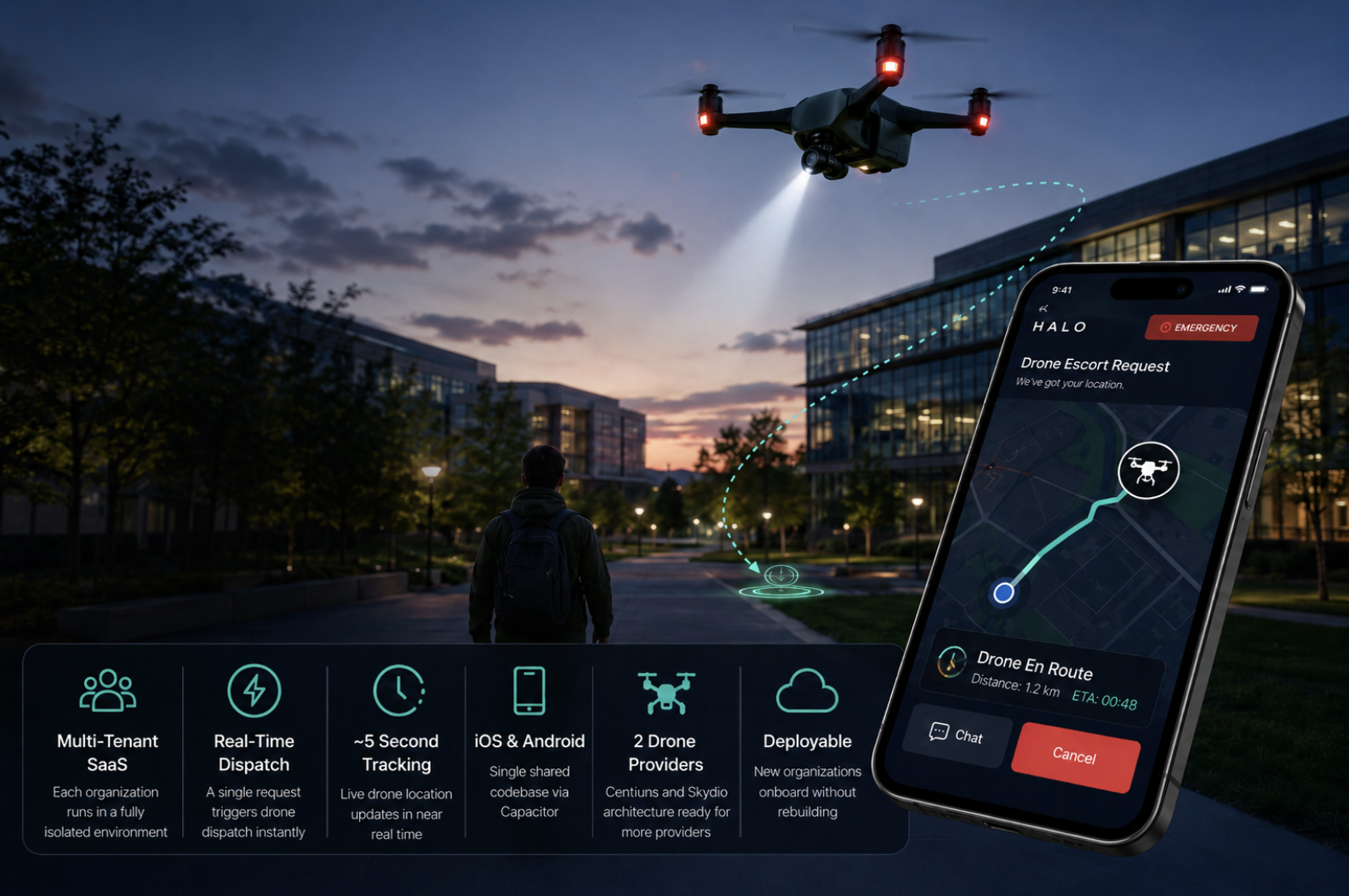
Halo: When Help Can’t Wait, the Drone Arrives First — Inside the Platform That Makes It Possible
A drone-assisted safety platform that turns a single emergency request into real-time drone dispatch, operator routing, live tracking, and secure multi-tenant coordination for campuses and controlled environments.
From Automation to AI: Our Partnership with InflexionPoint
Since 2022, our teams have worked together across industrial automation, life sciences, pharmaceuticals, and advanced manufacturing, combining deep domain expertise with software engineering to help manufacturers modernize operations and build the next generation of connected, data-driven facilities.

End-to-End Sample Traceability: Building a LIMS Workflow for Biotech Manufacturing
How we implemented end-to-end digital sample traceability for a biotech manufacturer using TrakSYS MES — replacing manual laboratory tracking with a fully compliant LIMS workflow aligned with biotech regulatory standards.

 AI Assistant