


What If the Charging Station Could Come to You? Building an MVP for a New Energy Business Model
When Pacific Energy set out to offer on-demand EV charging, they needed a digital platform that could connect drivers and fleet operators. Here's how we turned their vision into a working MVP.
At a Glance
Engagement scope: Product Discovery + MVP Development
Platform: iOS & Android mobile app + web fleet management dashboard
User types: 2 — EV drivers + fleet operators
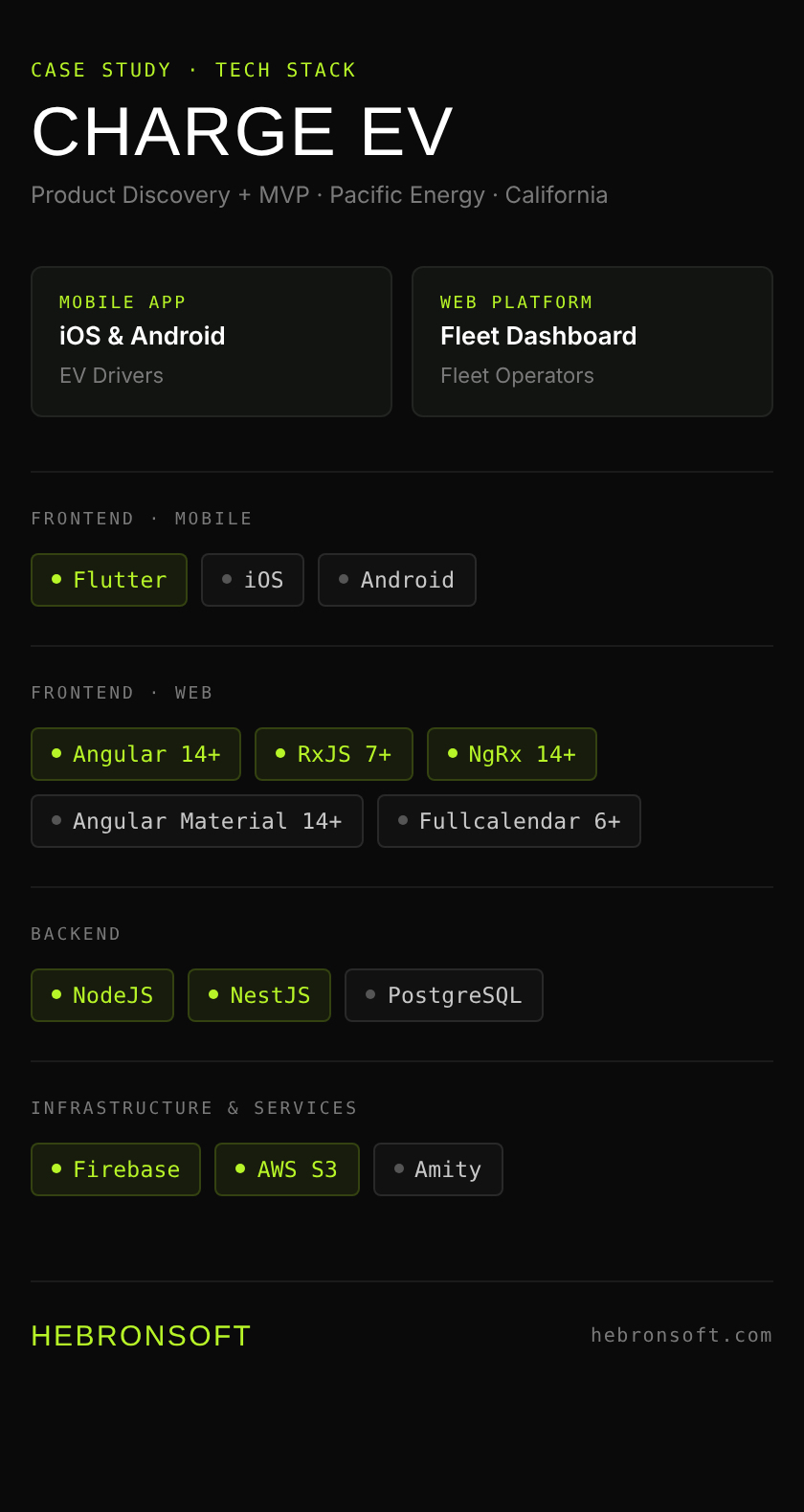
Tech stack: Flutter · Angular · NodeJS · NestJS · PostgreSQL · Firebase · AWS S3 · Amity
Industry: Energy Infrastructure · CleanTech
THE CLIENT
Four Decades of Energy Engineering Expertise
The story of Pacific Energy begins long before the company was founded.
Its founder and CEO, Philip Schaefer, entered the electrical construction and manufacturing industries in 1983. He established his first electrical construction and general contracting business in 1997, and founded Pacific Energy in California in 2009.
Built on more than four decades of industrial engineering experience, Pacific Energy specializes in advanced energy storage, hybrid power generation, and distributed energy infrastructure. Its technologies incorporate silicon carbide (SiC) power electronics and fast-charging, high-cycle-life lithium battery cells — addressing the complex energy requirements of commercial, industrial, and military applications.
The company's portfolio spans commercial solar and battery energy storage systems (BESS), industrial microgrids, generator hybridization, and waste heat recovery technologies.
For energy storage companies, industrial equipment manufacturers, and renewable energy providers, digital transformation increasingly means extending the capabilities of physical infrastructure through software. Pacific Energy's CHARGE EV project illustrates this transition: combining decades of energy engineering expertise with a custom digital platform designed to connect mobile power assets, customers, and fleet operators.
THE MARKET
When Energy Infrastructure Becomes a Digital Service
The United States had approximately 4.8 million electric vehicles on the road and roughly 176,000 public charging ports available as of Q1 2024. At current growth rates, the country needs 182,000 DC fast-charging ports and over 1 million Level 2 ports by 2030 to keep pace with projected EV adoption — targets that were only 12% covered as of early 2024. (Source: US DOE / AFDC, Q1 2024)
Fixed charging infrastructure faces structural constraints: capital-intensive installation, grid connection requirements, and location commitments that make deployment slow and uneven across geographies and use cases.
This is the opening for a different model — one where energy infrastructure moves. The global market for mobile EV chargers was projected to reach $2.4 billion by 2033 (as of a 2024 forecast), driven by the need to serve drivers, fleets, and industrial sites where fixed infrastructure cannot or will not reach. (Source: Guidehouse Insights, 2024)
The on-demand mobile charging model — a fleet of power trucks dispatched to drivers and commercial locations — sits at the intersection of energy logistics and digital services. And it only works with the right software behind it.
The transition extends beyond EV charging. According to Bain & Company's 2024 Global Machinery & Equipment Report, industrial companies that become digital solutions leaders double their shareholder returns compared to the industry average. The shift from physical product to software-enabled service is differentiating winners from laggards across energy, manufacturing, and infrastructure sectors. (Source: Bain & Company, 2024)
THE VISION
Charging Stations on Wheels
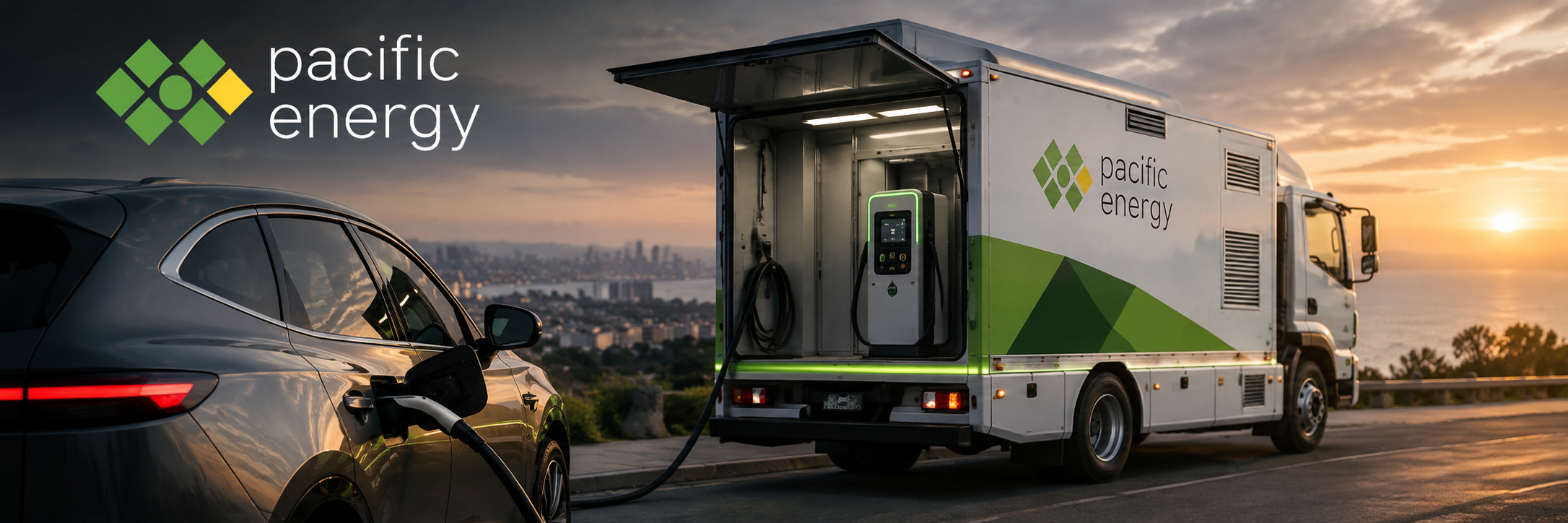
CHARGE EV is Pacific Energy's response to these dynamics: a fleet of mobile power trucks that deliver EV charging on demand, wherever drivers are.
The concept requires two things to work simultaneously. Drivers need to find, book, and use a truck with minimal friction. Fleet operators need visibility across a moving fleet to coordinate, track, and analyze performance.
Before Pacific Energy could build this system, it needed clarity on what the digital platform had to do — across both user types, on a shared data layer, in a way that could grow with the fleet.
THE CHALLENGE
Connecting Physical Energy Assets with Digital Services
Pacific Energy had deep expertise in energy systems engineering. What CHARGE EV required was a new capability: translating physical infrastructure into a digital service experience — for two completely different types of users, on the same platform.
EV drivers needed a simple, fast mobile app. Fleet operators needed operational control and data. These are not variations of the same product — they are distinct experiences built on shared infrastructure.
Building one without mapping the other produces a system that serves neither. This is the problem that product discovery is designed to solve before a single sprint begins.
HebronSoft addressed a similar architectural challenge when developing a custom transportation management system for USKO Logistics, connecting drivers, dispatchers, and back-office teams within a single platform.
INSIDE THE ROOM
Product Discovery for a New Energy Service Model
Pacific Energy engaged HebronSoft to begin with a structured product discovery phase — a process to define the platform architecture before writing code.
Working directly with the Pacific Energy team, HebronSoft mapped the two user experiences that had to coexist within a single system, identified the technical requirements connecting them, and established the architecture decisions that would determine development speed and long-term scalability.
The result was a clear product blueprint — built on how CHARGE EV needed to operate in practice, not on assumptions.
WHAT WE BUILT
Custom EV Charging and Fleet Management Software Development
On-Demand EV Charging Mobile Application
Built in Flutter for iOS and Android. EV drivers can locate the nearest available power truck on a live map, view its charging capacity and status, and arrange on-the-spot charging directly through the app.
This approach reflects HebronSoft's broader expertise in transportation and fleet management software development, connecting mobile assets with the teams responsible for their operations.
Fleet Management Web Dashboard
Built in Angular 14+ with NgRx state management. Fleet operators get visibility across the full fleet — location, availability, and status — alongside operational data and scheduling tools.
Backend & Infrastructure
NodeJS + NestJS API layer, PostgreSQL database, Firebase, AWS S3, and Amity. Fullcalendar 6+ is included in the stack.
Full tech stack:
Flutter · Firebase · Angular 14+ · RxJS 7+ · NgRx 14+ · Angular Material 14+ · Fullcalendar 6+ · NodeJS · NestJS · PostgreSQL · AWS S3 · Amity
BUSINESS VALUE
From Industrial Hardware to Software-Enabled Services
The Pacific Energy project illustrates how established industrial companies can extend their engineering capabilities through custom software development — and how the challenges it addressed apply well beyond electric mobility.
Another example of this transformation is VOVA Trailers' connected IoT platform, where HebronSoft helped a California-based hardware startup bring its Smart RV concept into the digital world.
Energy storage companies, industrial equipment manufacturers, renewable energy providers, and fleet operators often face the same question when developing new digital products: how do we connect our physical assets with the customers and operational teams who depend on them, and how do we validate that model before investing in a full platform?
As a software engineering partner for industrial and energy companies, HebronSoft provides product discovery, custom software development, MVP engineering, real-time data integration, and cloud-based platform architecture. The CHARGE EV project demonstrates how these capabilities apply when an established engineering business explores a new service model at the intersection of energy, mobility, and digital infrastructure.
FREQUENTLY ASKED QUESTIONS
Common Questions from Industrial and Energy Companies
How do energy companies choose a software development partner?
Industrial and energy companies typically look for a partner with experience translating domain-specific operational logic into software — not just technical skills. For Pacific Energy, that meant finding a team that could map the CHARGE EV operational model before defining what to build. HebronSoft's product discovery approach provided that structured entry point.
What does product discovery involve for industrial software projects?
Product discovery is a structured process for defining platform architecture, user flows, and technical requirements before development begins. For industrial companies with complex operational models — such as managing a fleet of mobile energy assets across multiple user types — discovery reduces the risk of building in the wrong direction.
How can industrial equipment manufacturers turn hardware into digital services?
The transition typically requires a clear model of who uses the product and how, a software architecture that reflects the operational reality, and a staged development approach that validates assumptions before full investment. HebronSoft helps industrial companies work through this process from initial product discovery through MVP.
What features should a mobile EV charging platform include?
A functional on-demand EV charging platform needs at minimum: real-time asset location and status visibility for drivers, an intuitive booking flow, and a fleet operations dashboard for the team managing the trucks. The specific architecture depends on the operational model, which is why product discovery precedes development.
How can companies build custom fleet management software?
Custom fleet management software typically requires real-time data integration across moving assets, role-based interfaces for different user types, and a backend architecture that handles concurrent updates at scale. The right approach depends on fleet size, asset type, and operational workflows — which is why the design phase matters before development begins.
Why develop an MVP before investing in a full-scale industrial software platform?
An MVP tests the core product hypothesis with real users before the full architecture is committed. For industrial companies entering a new digital segment, this is particularly valuable: the operational assumptions that feel obvious on paper often look different once real users interact with the system.
Can an external software engineering team help energy companies develop new digital products?
For companies whose core expertise is in physical engineering — energy storage, industrial equipment, power systems — bringing in a specialized software engineering partner allows the internal team to stay focused on the domain while the technical platform is built in parallel. HebronSoft works with industrial and energy companies on this basis.
KEY INSIGHTS
What This Project Reveals About Industrial Digitalization
Product discovery is the entry point for industrial companies moving into software.
Companies with deep domain expertise often know exactly what problem they are solving — but need a structured process to translate that expertise into platform architecture. Discovery is not a preliminary step. It is the foundation the product is built on.
The two-sided platform challenge appears across industrial services.
Any model that connects physical assets with end users faces the same design problem: two different user experiences on one shared data layer. Getting the architecture right at the discovery stage determines whether the product scales or requires a rebuild.
Industry: CleanTech · Energy Infrastructure
Location: California, USA
Service: Product Discovery · MVP Development · Platform Architecture
Platforms: iOS · Android · Web

Users could effortlessly locate the nearest power truck… Great work!
HebronSoft performed a discovery project for our platform to manage Pacific Energy's fleet of power trucks, which were essentially mobile charging stations on wheels. Through the app, users could effortlessly locate the nearest power truck, view its charging capacity and status, and arrange on-the-spot charging. Great work!


You might be interested in
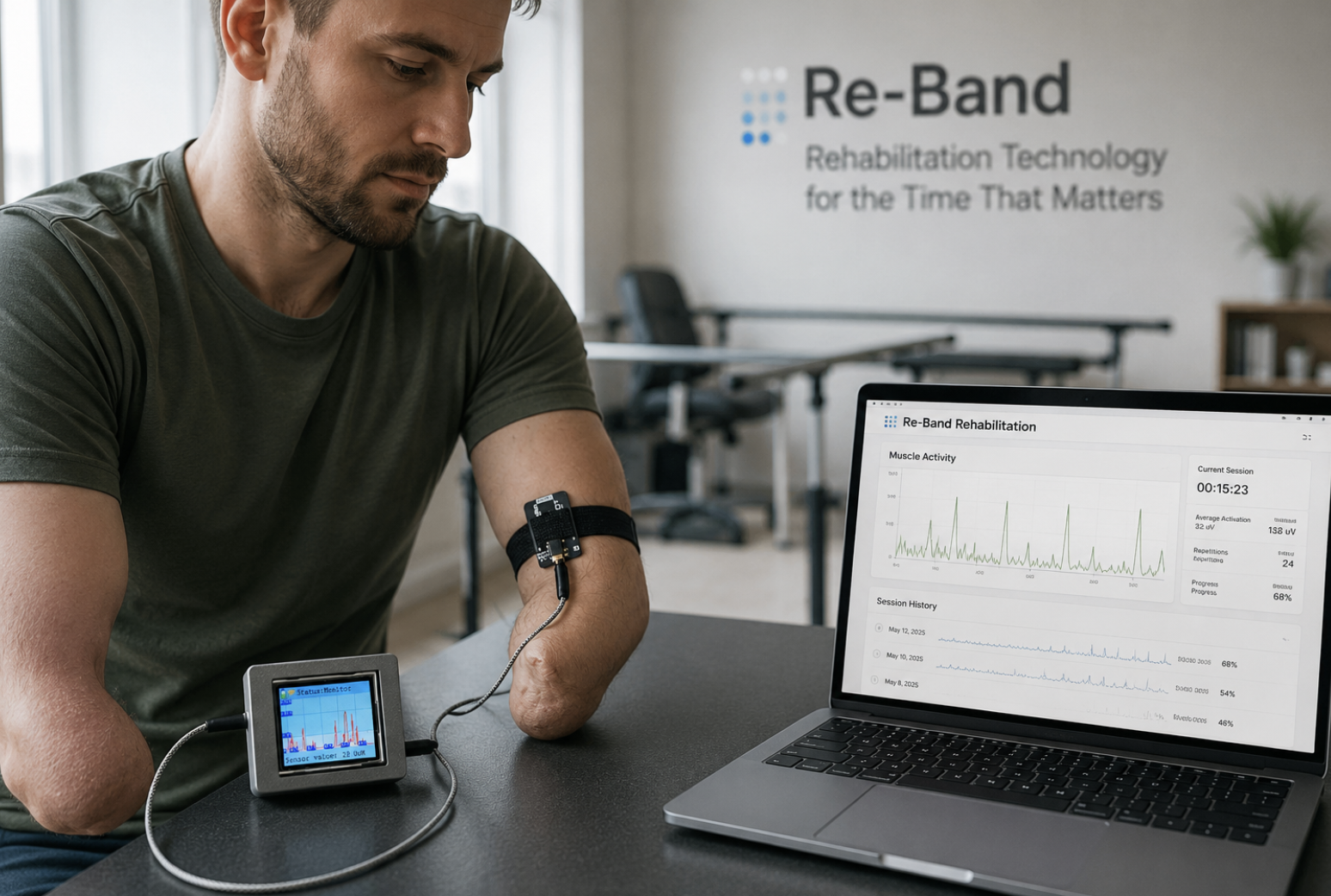
Re-Band: Building the Missing Link in Prosthetic Rehabilitation
A wearable rehabilitation device that helps amputees maintain residual muscle activity while waiting for a prosthesis. Developed inside HebronSoft’s Innovation Lab, Re-Band combines EMG sensing, real-time feedback, remote monitoring, and direct input from veterans, students, engineers, and rehabilitation specialists.
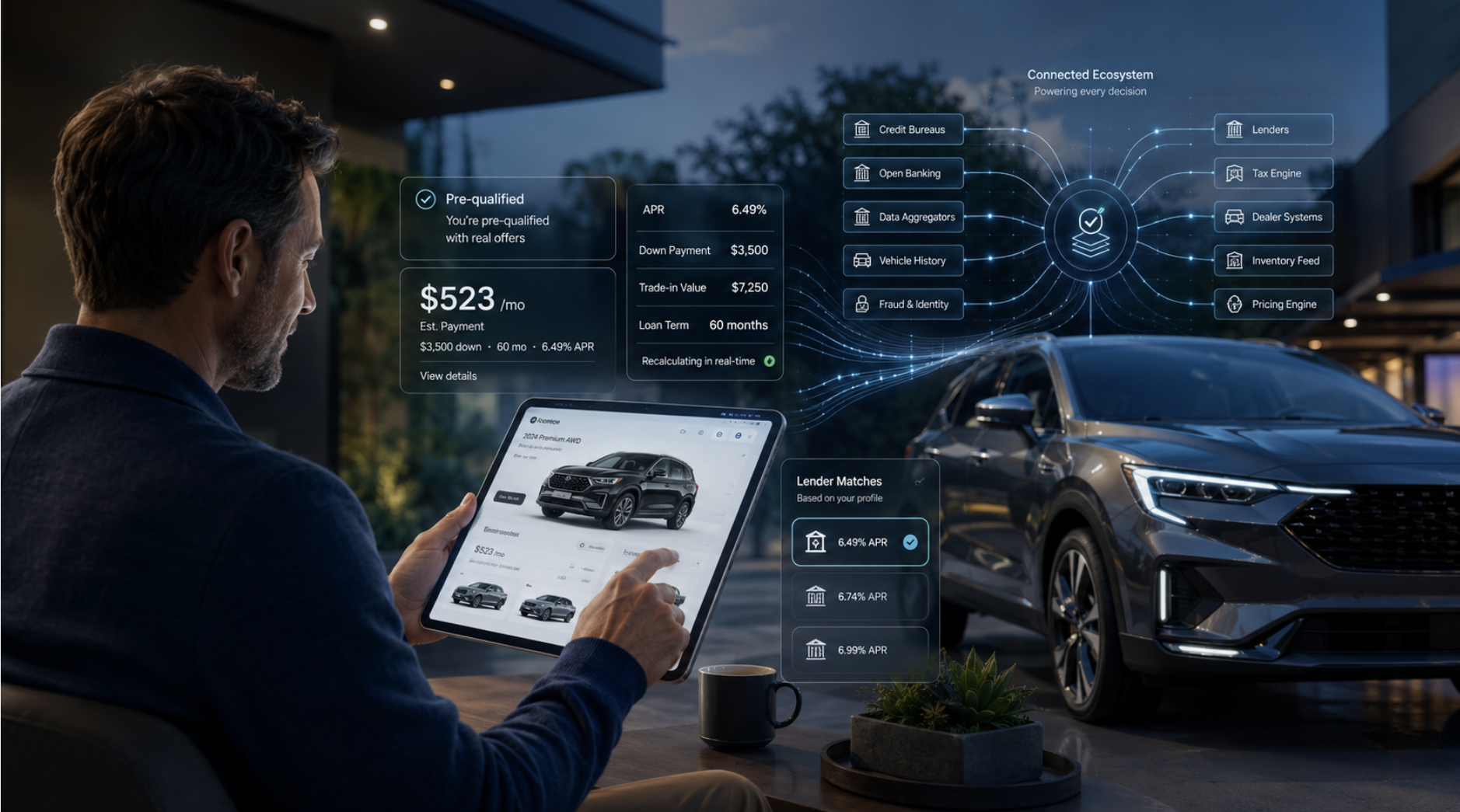
How We Built the Financial Decisioning Layer Behind a Leading North American Vehicle Marketplace
How HebronSoft engineered the decisioning, integrations, and deal-math systems that turn thousands of vehicles and 40+ lenders into real, financeable offers in under 60 seconds.
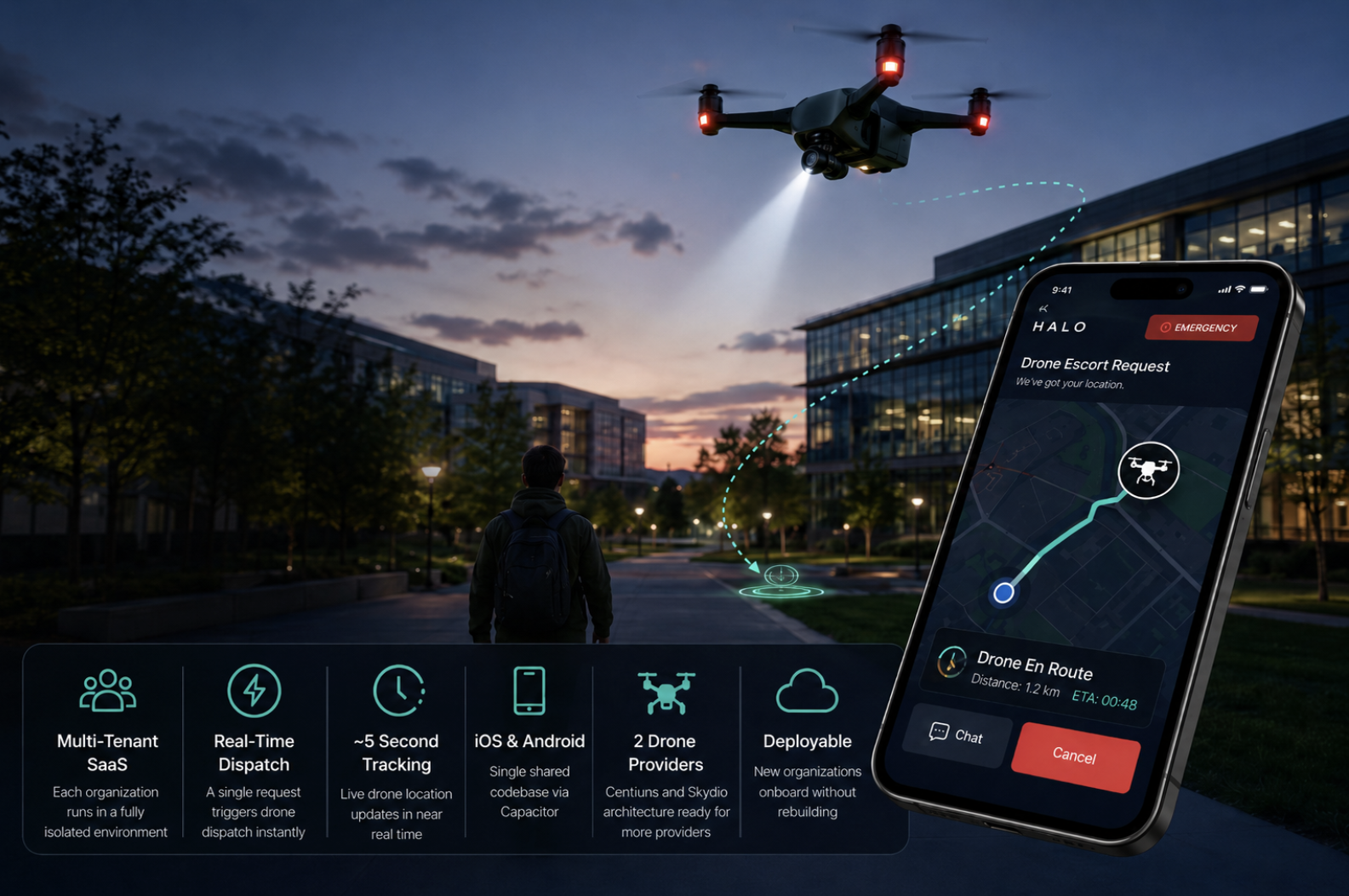
Halo: When Help Can’t Wait, the Drone Arrives First — Inside the Platform That Makes It Possible
A drone-assisted safety platform that turns a single emergency request into real-time drone dispatch, operator routing, live tracking, and secure multi-tenant coordination for campuses and controlled environments.
 AI Assistant