


End-to-End Sample Traceability: Building a LIMS Workflow for Biotech Manufacturing
How we implemented end-to-end digital sample traceability for a biotech manufacturer using TrakSYS MES — replacing manual laboratory tracking with a fully compliant LIMS workflow aligned with biotech regulatory standards.
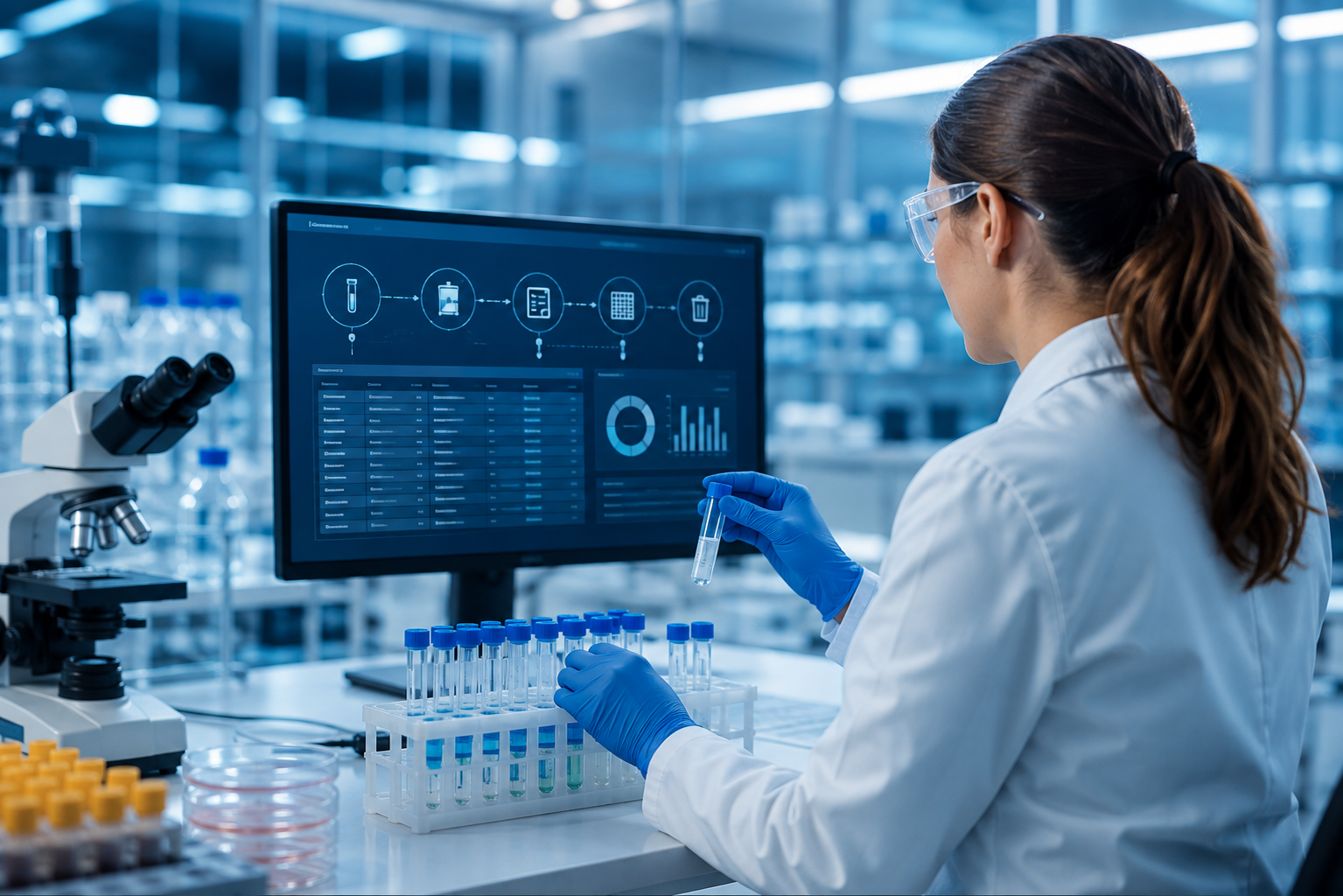
At a Glance
- Industry — Biotech · Life Sciences Manufacturing
- Stack — TrakSYS MES platform · MS SQL
- Services — Solution Implementation
- Result — 100% digital sample traceability across full laboratory lifecycle
The Client
A biotech manufacturer operating in a regulated laboratory environment
Our client is a biotech manufacturing company operating in a highly regulated environment where data integrity, sample traceability, and compliance readiness are non-negotiable. Laboratory processes — sample collection, test ordering, result recording, and quality control — carried significant manual overhead and systemic risk.
The name of the client is not disclosed under the terms of our engagement.
The Problem
Manual tracking in an environment where errors have regulatory consequences
In biotech manufacturing, a sample is not just a data point — it is a chain of custody. Every container, every test order, every result, and every state transition must be traceable, auditable, and defensible in front of a regulator. Manual tracking introduces gaps. Legacy workflows introduce inconsistency.
And when a system carries technical debt from years of patched logic, the risk compounds with every new test run.
The client needed to replace manual and unstable laboratory tracking with a fully compliant, digital LIMS workflow — one that could handle end-to-end sample lifecycle management, enforce traceability at every stage, and hold up under regulatory inspection.
Inside the Room
Technical debt was the first obstacle
Before any new functionality could be built, the existing system had to be stabilized. Critical legacy defects were creating inconsistent logic and unstable workflows — disrupting operations and undermining user confidence in the LIMS module. The team identified and eliminated those defects first, establishing a reliable foundation before implementing the new sample lifecycle workflows.
This sequencing — stabilize before building — shaped the entire engagement. It is the right decision in regulated environments where building on unstable foundations creates compliance risk that compounds over time.
What We Built
A fully compliant LIMS workflow within TrakSYS
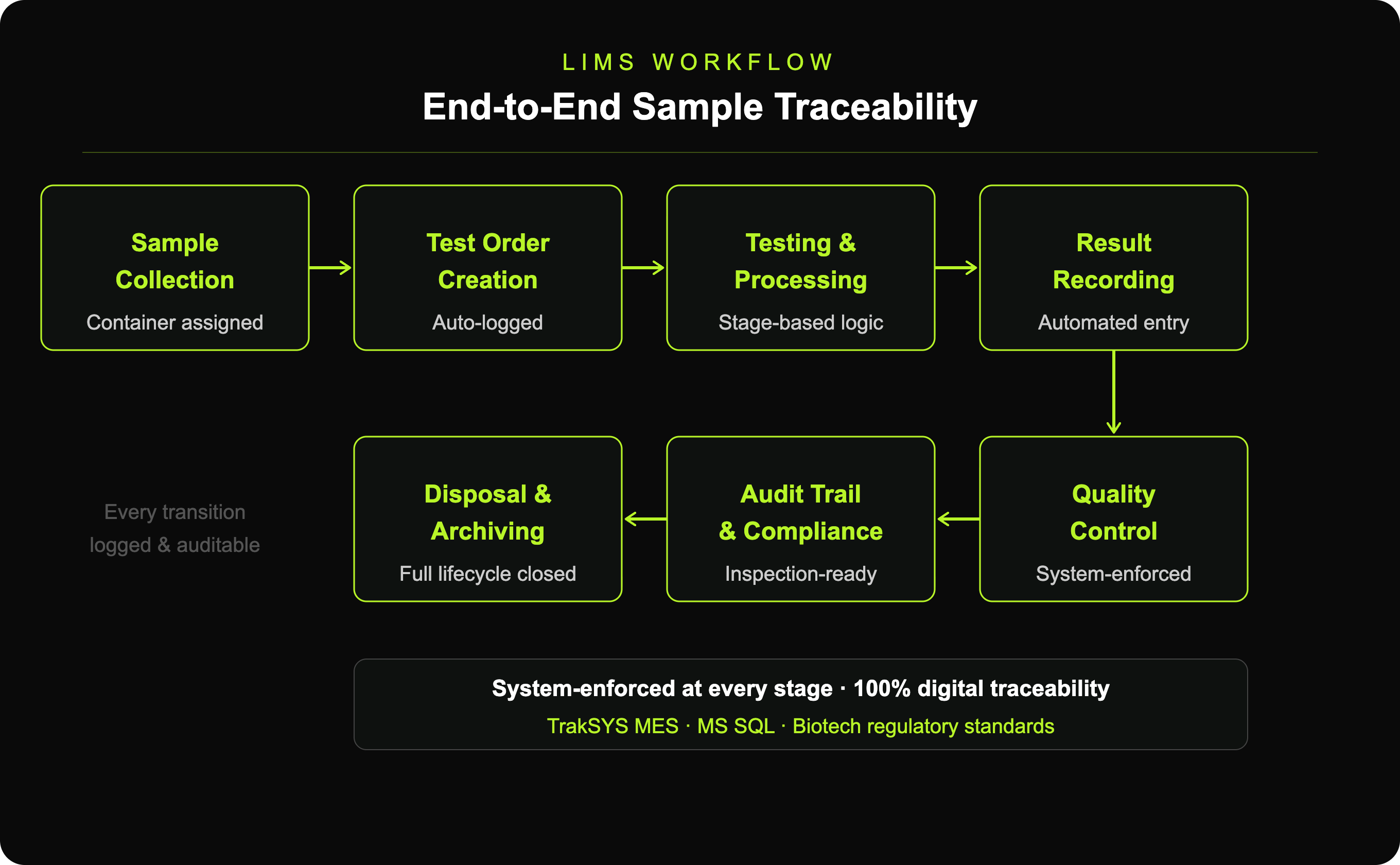
HebronSoft implemented a complete Laboratory Information Management System workflow within the TrakSYS MES platform, covering the full lifecycle of samples from collection through disposal — with system-enforced traceability at every stage.
Sample Lifecycle Management
- End-to-end sample lifecycle workflow aligned with laboratory location hierarchy, container logic, and stage-based processing
- Full digital traceability of samples and bins across all lifecycle stages
- System-enforced state transitions — no manual overrides without audit trail
- Structured audit trails for test orders, related bins, and samples
Test Order & Result Management
- Streamlined test order creation and management
- Automated test result recording — reducing manual handling and improving data consistency
- Real-time visibility into test status and outcomes across the laboratory
Compliance & Governance
- Inspection-ready audit trails aligned with biotech regulatory standards
- Transparent delivery governance: structured requirement management and implementation traceability
- Backlog governance and change tracking introduced for planning and execution visibility
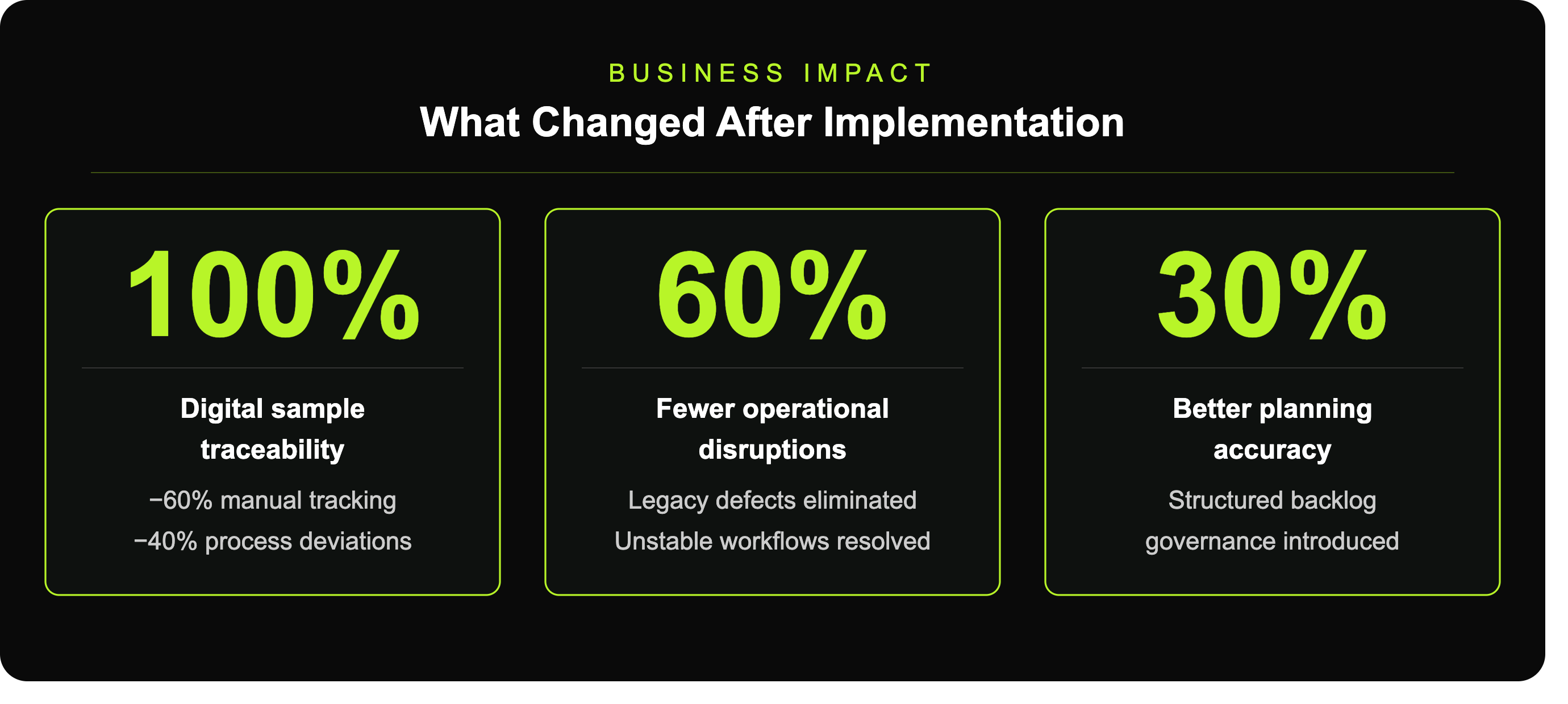
Business Impact
From manual tracking to full digital traceability
The platform is now inspection-ready: audit trails are structured, state transitions are system-enforced, and the team has full visibility into sample status across the laboratory.
What We Learned
In regulated environments, technical debt is a compliance risk
In most software projects, technical debt slows development. In regulated manufacturing environments, it creates a more serious problem: workflows that behave inconsistently cannot be trusted in front of a regulator.
Before building anything new, the team had to establish that the foundation was reliable. That sequencing added time at the start of the engagement and reduced risk across everything that followed. In GMP and biotech contexts, this is not optional — it is the correct order of operations.
You might be interested in
Halo: When Help Can’t Wait, the Drone Arrives First — Inside the Platform That Makes It Possible
A drone-assisted safety platform that turns a single emergency request into real-time drone dispatch, operator routing, live tracking, and secure multi-tenant coordination for campuses and controlled environments.

From Automation to AI: Our Partnership with InflexionPoint
Since 2022, our teams have worked together across industrial automation, life sciences, pharmaceuticals, and advanced manufacturing, combining deep domain expertise with software engineering to help manufacturers modernize operations and build the next generation of connected, data-driven facilities.

How We Unified Ignition SCADA, MES, and Operational Tools Into a Single Environment for Manufacturing Operations
How we connected Ignition SCADA, TruTraq, LabOWL, and Smart Start into a single unified platform for manufacturing operations across life sciences, food & beverage, and critical infrastructure — eliminating the need to switch between standalone industrial applications.

 AI Assistant